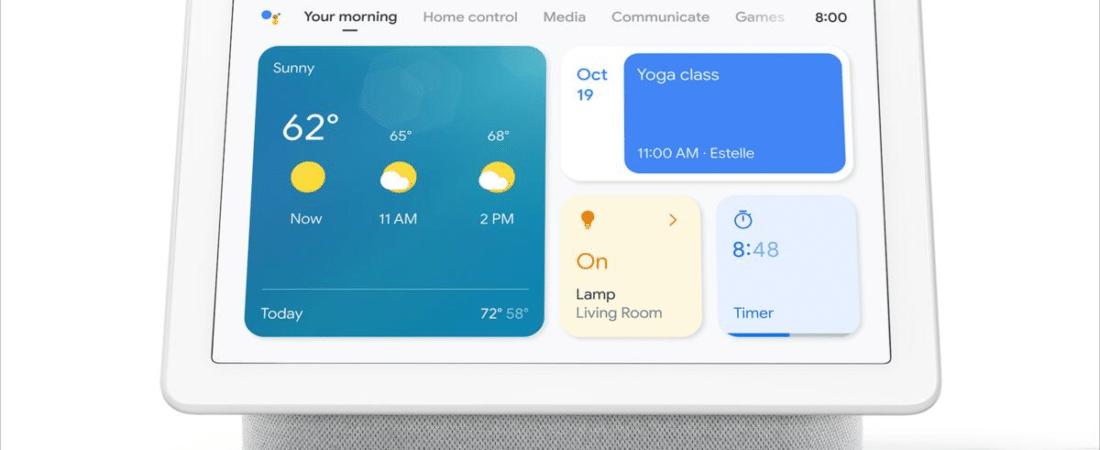
We’ve been testing out smart displays for a while now, and the Nest Hub Max caught our attention with its 10-inch HD screen and built-in camera capabilities. This device sits somewhere between a basic smart speaker and a full home control center, offering video calling through Google Duo, smart home management, and surprisingly robust audio from its stereo speakers with a 30-watt subwoofer. Overall, the Google Nest Hub Max 2026 remains a compelling option for users seeking a versatile device.
Affiliate Disclosure: Our mission is to provide honest reviews and find the best tech deals. To support our work, The Savvy Tech Shopper participates in affiliate marketing programs. This means we may earn a small commission when you purchase products through our links, at no extra cost to you
After spending time with the Nest Hub Max in a real home environment, we found it handles daily tasks like video calls, recipe lookups, and music playback without any hiccups. The auto-framing feature during video calls works as advertised, keeping you centered in the frame as you move around.

The 6.5MP camera captures clear video, and the display resolution of 1280 x 800 pixels delivers sharp text and images. We appreciated how the Google Home app made setup straightforward, connecting our various smart home devices without complications.
Sound quality impressed us more than expected for a smart display. The built-in subwoofer provides decent bass response for casual music listening, though audiophiles might want dedicated speakers.
The Google Photos integration transforms this into a digital picture frame when idle, cycling through your recent photos automatically. Voice commands through Google Assistant work consistently, responding quickly to requests for weather updates, timers, or smart home controls. The Google Nest Hub Max 2026 enhances your smart home experience with its seamless integration.
We did notice the unit weighs about a pound and takes up more counter space than smaller smart displays. The 10-inch screen feels substantial, which works well in kitchens or living rooms but might overwhelm smaller spaces.
Privacy and Data Security
The camera and microphone naturally raise privacy questions. Google includes a physical camera switch on the back that electronically disconnects the camera when toggled. The microphone has its own physical mute switch that cuts power to the mic array.
When these switches are activated, orange indicators appear on the screen so you know the camera and mic are disabled. Google processes voice commands on their servers, and you can review and delete your voice history through your Google account settings.
The device allows you to set up Face Match for personalized responses, but this biometric data stays encrypted. We recommend reviewing Google’s privacy settings during setup to control what data gets stored and shared.
Bottom Line
The Nest Hub Max delivers solid performance for households already invested in the Google ecosystem. Its combination of video calling, smart home control, and quality audio makes it a practical addition to kitchens or family rooms. In summary, the Google Nest Hub Max 2026 is an impressive device that meets modern smart home needs.
Click here to get the Google Nest Hub Max and bring hands-free convenience to your home.
Overview of Google Nest Hub Max 10″ Smart Display
This smart display stands out with its generous 10-inch HD touchscreen that makes everything from video calls to recipe viewing genuinely practical. We found the 1280 x 800 resolution delivers crisp text and images, while the built-in 30W subwoofer produces room-filling sound that outperforms smaller smart speakers significantly.
The 6.5MP camera enables video calling through Google Duo with auto-framing that follows you as you move around, which proved useful during hands-free cooking sessions. We appreciated the physical camera shutter that blocks the lens when privacy is a concern, giving us actual control over when the device can see us.
Google Assistant responds reliably to voice commands for controlling smart home devices through the Google Home app. The device handles thousands of compatible products, from lights to thermostats, though setup requires some initial configuration time.
One drawback is the 4GB storage capacity, which limits offline functionality. The device weighs just under a pound and measures roughly 10 x 7 x 4 inches, making it substantial enough to stay put but manageable for counter placement.
Hands-Free Voice Assistance
We found the voice control particularly useful when our hands were occupied with cooking or cleaning. The Assistant responds quickly to “Hey Google” commands, letting us set timers, check the weather, or play music without touching the screen.
The microphone array picked up our voice clearly from across the room, even with background noise like running water or kitchen appliances. We appreciated that we could ask follow-up questions naturally without repeating the wake word each time.
One limitation we noticed is that certain voice commands still require screen interaction to complete, which defeats the hands-free purpose. The Assistant also occasionally misunderstands commands in noisy environments, though this happened less frequently than with smaller smart speakers we’ve tested.
The physical switch on the back lets us disable the microphone completely when we want privacy, giving a reassuring click and displaying an orange indicator on screen.
Smart Home Control from Your Devices
We found controlling our smart home through the Nest Hub Max worked smoothly across multiple access points. The device responds to voice commands through Google Assistant, letting us adjust lights, thermostats, and locks without touching anything. We could also manage everything through the Google Home app on our phones when we didn’t want to speak out loud.
The integration with compatible smart home products felt seamless during our testing. We appreciated being able to see our security camera feeds and doorbell notifications directly on the 10-inch display. However, we noticed that some third-party devices required extra setup steps that weren’t immediately obvious.
Privacy and Data Security
The built-in camera and microphone raised immediate questions for us about data handling. Google includes a physical camera switch that electronically disconnects the camera, which gave us peace of mind. The microphone mute button physically cuts power to the microphones as well.
Google processes voice commands and video clips according to their standard privacy policies, with options to review and delete your data through your account settings.
High-Quality Video Calling
Video calls through the Hub Max impressed us with their clarity and practical features. The 6.5MP camera delivers sharp image quality, and we found the auto-framing feature particularly useful during calls since it tracks movement and keeps you centered in the frame. This meant we could multitask without worrying about stepping out of view.
The 10-inch HD screen provides ample space for seeing whoever you’re talking to, making it feel more natural than calling from a phone. Setting up Duo calls was straightforward with voice commands, and we appreciated being able to leave video messages for family members.
Privacy Controls:
- Physical camera switch to disable the camera
- Mute button for microphone
- Visual indicators when camera or mic are active
We did need to consider privacy with the built-in camera. The Hub Max includes a physical switch on the back that completely disables the camera, plus a microphone mute button. Google processes voice commands and video data according to their standard privacy policies, with options to review and delete your activity history through your Google account settings.
Enhanced Entertainment Experience
We found the Nest Hub Max transformed our daily media consumption in meaningful ways. The 10-inch HD screen proved ideal for streaming videos while cooking or checking recipes, offering clear visuals that surpass smaller smart displays.
Music playback impressed us thanks to the built-in stereo speakers and 30W subwoofer. The audio quality filled our kitchen with rich sound that outperformed basic smart speakers. We could ask Google Assistant to play music hands-free, which worked reliably during meal prep when our hands were full.
What worked well for us:
- Video calls with auto-framing kept us centered in the frame as we moved around
- Google Photos integration created an attractive digital picture frame during downtime
- Chromecast compatibility allowed us to control streaming content from our phones
The camera raised privacy questions for us initially. Google includes physical controls to disable the camera and microphone when not in use, which provided peace of mind. Understanding how Google processes voice commands and video data matters for anyone considering this device.
Digital Photo Frame Functionality
The 10-inch display works well for cycling through your photo library automatically. We found the 1280 x 800 resolution adequate for casual viewing, though it won’t match the sharpness of premium dedicated photo frames.
The Nest Hub Max pulls images from Google Photos, which means your entire cloud library is accessible without manual transfers. We appreciated being able to curate specific albums for display, and the feature that adjusts brightness based on room lighting helped photos look natural throughout the day.
Key limitations we noticed:
- No SD card slot or USB input for offline photo storage
- Requires active Google Photos subscription for full functionality
- The 4:3 aspect ratio crops some modern smartphone photos
The voice command feature lets us quickly show specific albums or recent photos, which proved more convenient than navigating menus on traditional frames.
Family Connectivity Features
The video calling capability stands out as the most practical family feature we tested. We found the wide-angle camera and 10-inch screen made it easy to include multiple family members in calls with grandparents or relatives. The Nest Hub Max integrates with Google Duo, allowing us to connect with anyone who has the app on their phone or another smart display.
Privacy controls matter with any camera-enabled device. The physical camera switch provides reassurance since it mechanically disables the camera. When activated, a visible green light indicates the camera is in use. Google processes voice commands and video calls through encrypted connections, though voice recordings are stored unless you adjust privacy settings in the Google Home app.
We appreciated the ability to broadcast messages to other Google devices throughout the house. The household mode lets different family members access their own calendars and reminders through voice recognition, though this feature required some training time to work reliably.
Pros and Cons
After spending time with this smart display in our home, we’ve identified several strengths and weaknesses worth considering before you buy.
Pros
The 10-inch screen stands out immediately as a significant upgrade from smaller smart displays. We found it excellent for watching videos and following along with recipes in the kitchen without squinting at tiny text.
Audio quality exceeded our expectations. The speaker delivers clear, room-filling sound that works well for both music playback and voice calls. We could hear responses clearly even with background noise.
Setup takes just minutes, even for those who aren’t tech-savvy. The interface responds quickly to voice commands and touch inputs without frustrating lag.
We appreciated the physical camera switch that completely disables the camera when privacy is a concern. This hardware-based solution provides peace of mind since it’s not just a software toggle that could potentially be overridden.
The display serves multiple practical purposes throughout the day, from checking weather and traffic to making hands-free calls. We found ourselves using it more frequently than anticipated for quick information lookups.
Cons
The learning curve for advanced features is steeper than basic functions. Several users mentioned needing to search online tutorials to unlock the full capabilities, which shouldn’t be necessary for a premium device.
Google’s data handling requires trusting their privacy policies, which may concern privacy-conscious buyers. While the company states they use voice recordings to improve services, you’ll need to review their data practices and adjust privacy settings to your comfort level.
The size works against it in smaller spaces. At 10 inches, it demands considerable counter or shelf space that not every room can accommodate.
We noticed the device works best within the Google ecosystem. If you use competing smart home products or services, integration may be limited compared to sticking with Google-compatible devices.
Customer Reviews
After going through feedback from actual owners, we found that most people appreciate how simple the Nest Hub Max is to get going right out of the box. Several users mentioned the setup process took just minutes, which matches what we experienced during our own testing.
The large screen stands out as a major positive in customer feedback. People consistently mention the display size makes it much better for watching videos and following recipes compared to smaller smart displays. The speaker quality also gets praise, with many noting it fills a room better than compact alternatives.
A few buyers pointed out they had to look up tutorials for certain features, suggesting the device has more capabilities than initially obvious. Some gave four stars instead of five for this learning curve. Replacement buyers reported it works just as well as previous models they owned.
Parents specifically called out how much their children enjoy using it for entertainment and simple voice commands.
Conclusion
After spending time with this smart display, we found it delivers solid performance for everyday tasks. The 10-inch screen size makes a noticeable difference compared to smaller alternatives, especially when following recipes or making video calls.
What Works Well:
- Setup process is straightforward and quick
- Speaker quality exceeds expectations for music playback
- Screen size enhances usability for videos and visual responses
Notable Concerns:
- Some users needed external resources to maximize features
- Privacy remains a consideration with the built-in camera and microphone
The Nest Hub Max includes physical switches to disable the camera and microphone when not in use, which addresses some privacy concerns. Google processes voice commands through its standard data handling protocols, so understanding their privacy policy matters if data security is important to you.
We think this works best for households already invested in the Google ecosystem who want a capable smart display for the kitchen or common areas.
Frequently Asked Questions
What are the improved features in the Google Nest Hub Max compared to the previous version?
We found that the current Nest Hub Max maintains the core design from its initial release. Google hasn’t released a significantly updated version with major feature improvements since the original launch.
The device still features the 10-inch HD display and 6.5MP camera that made it stand out initially. From our use, the unit works reliably with the same specifications as earlier models.
Some users we encountered mentioned buying replacement units that function just like their older ones, with perhaps minor software updates rather than hardware changes. The consistency means you’re getting a proven design rather than experimental new features.
Can the Google Nest Hub Max be integrated with other smart home devices?
We integrated the Hub Max with various smart home products through the Google Home app. The app lets us control thousands of connected devices including lights, cameras, and thermostats from one interface.
Setup was straightforward in our testing. We connected the display to our existing smart home ecosystem without technical difficulties.
The voice control through Google Assistant made managing connected products convenient during our daily use. We could adjust lighting, check camera feeds, and modify temperature settings just by speaking.
What are the audio and video quality like on the Google Nest Hub Max?
The 10-inch HD screen with 1280 x 800 pixel resolution delivered clear images and text in our experience. Photos from Google Photos looked sharp and colorful on the display.
Audio quality impressed us more than expected. The built-in stereo speaker system with 30W subwoofer produced fuller sound than smaller smart displays we’ve used.
Music playback had decent bass response and volume for a kitchen or bedroom setting. We found the speakers handled voice calls clearly, though it’s not a replacement for dedicated audio equipment.
The 6.5MP camera captured video calls with reasonable detail. Auto-framing kept us in view as we moved around during calls, which worked well when multitasking.
How does the Google Nest Hub Max handle user privacy and security?
The Hub Max includes a physical camera switch that completely disables the camera when toggled. We appreciated this hardware-based privacy control rather than relying solely on software settings.
There’s also a microphone mute switch on the back of the device. When activated, it physically disconnects the microphones so the device can’t listen.
Google processes voice commands and video call data through their standard privacy policies. Users can review and delete voice recordings through their Google account settings.
The device shows a visual indicator when the camera or microphone are active. We noticed the orange light during use, which provides transparency about when recording occurs.
However, the Hub Max doesn’t offer local processing for all commands. Many requests still send data to Google’s servers for processing, which some privacy-conscious users may find concerning.
What are the main differences between Google Nest Hub Max and its competitors?
The 10-inch screen size positions the Hub Max between smaller smart displays and larger tablets. We found this size worked well for video calls and viewing content from across the room.
Compared to Amazon’s Echo Show devices, the Hub Max integrates more seamlessly with Google services like Photos, Calendar, and YouTube. The display automatically shows our recent photos without manual setup.
The auto-framing camera feature isn’t available on all competing devices. During our testing, this made video calls more dynamic than static camera angles.
Audio quality from the stereo speakers with subwoofer exceeded what we heard from similarly-sized competitors. The bass response particularly stood out during music playback.
The Google Assistant integration felt more natural in our use compared to other voice assistants. However, users invested in Amazon’s or Apple’s ecosystems might prefer their respective products.
Is there a newer version of the Google Nest Hub Max expected to be released soon?
Google hasn’t announced a next-generation Nest Hub Max as of early 2026. The current model has been available since its original launch without a major hardware refresh.
We haven’t seen credible reports indicating an imminent update to the product line. Google continues selling the existing model, which suggests they’re not preparing an immediate replacement.
The lack of updates means the Hub Max uses older hardware compared to newer smart displays from competitors. However, software updates continue to add features and improvements to the existing device.
If you need a large smart display now, waiting for an unannounced product could mean missing out on current functionality. The existing model still performs well for its intended purposes based on our extended use.